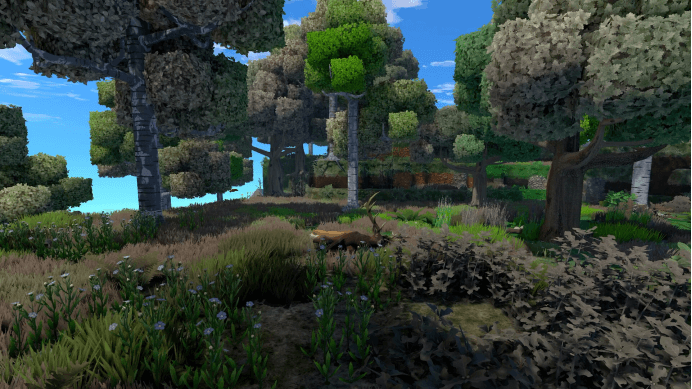
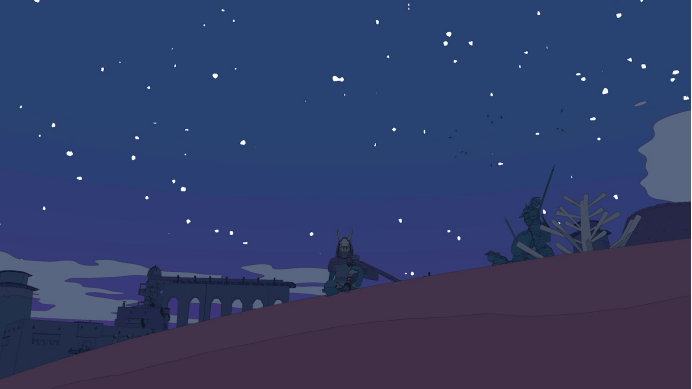
My hand hung above the doorknob and didn’t push it open. In _The Vanishing of Ethan Carter_, I am not a detective, but more like a psychic archaeologist. My tool is not a magnifying glass, but a kind of “resonance”. Standing in the woods of the Red Creek Valley, I can see the “luster” left in the past — a dropped pocket watch is wrapped with anxious dark red, and a panicked white color is condensed in the trampled grass. Touching them is not to get a text clue, but to make the whole scene come to life around me like a movie in reverse.
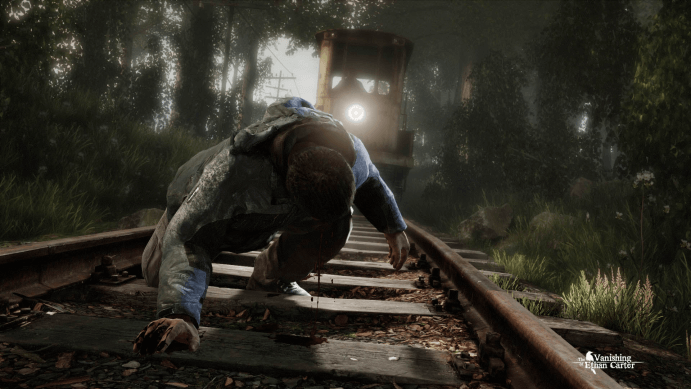
The most “resonance” that made me unable to move was that a corpse was found in the forest. The moment we touched, time began to flow backwards. The blood retracted back to the wound, and the fallen figure stood up and began to argue and retreat with the invisible opponent. Not only did I see the process, but I was also pulled into the emotional density of that space — the light was cold, the sound of the wind was sharp, and even the air seemed to be filled with the desperate static electricity at that time. When the illusion is over, everything returns to silence, and only that land remembers it. It remembers the depression of the soil, the scraping of the bark and the long-lasting chill. My task is not to reason, but to walk through these spaces and let them replay what they remember to me. Memories are not kept in the diary, but sealed in the place. Pushing open a door may be playing a part of the past.
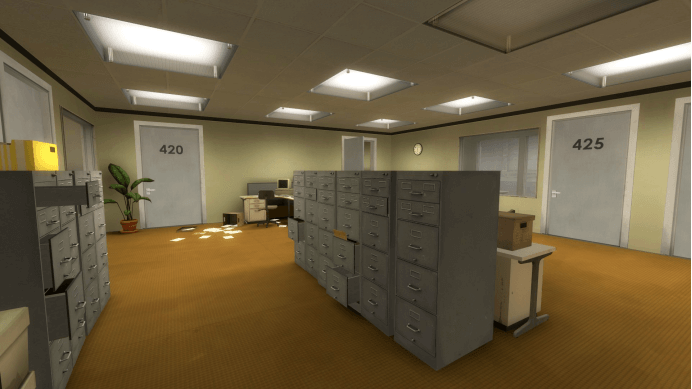
Another completely different house of memory is waiting for me in _Gone Home_. It was a rainy night in 1995. I returned to my hometown in Oregon. The house was dark and my family was nowhere to be found. There is no supernatural power, only me, a flashlight, and a whole house full of traces of life.
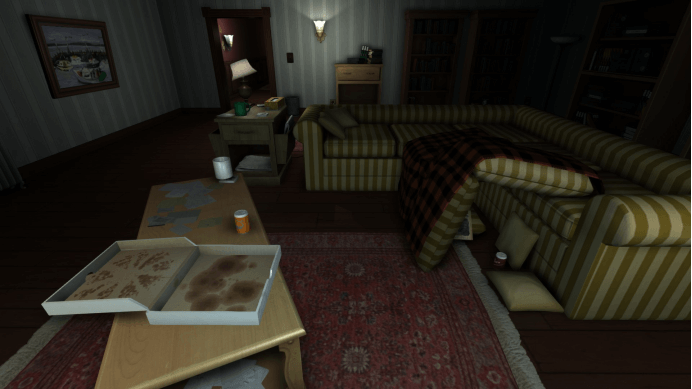
The memories here are private, trivial and need to be stitched together. It was hidden in the rock concert ticket hidden by sister Sam deep in the wardrobe, in the increasingly scribbled and eventually wrinkled manuscripts in the father’s study, and in the half-recorded tape about marriage counseling on the mother’s greenhouse workbench. The house itself is a huge and three-dimensional diary. The wallpaper pattern in the corridor, the unwashed coffee cups on the kitchen countertop, and the channels on the TV in the living room are all silently telling the specific and subtle living conditions of the family after I left.
I walked to the attic, which was the end of the memory of the whole house. There is the final evidence left by Sam and her lover — a map of the planned escape, some personal belongings, and the open skylight. There was no farewell letter, but that space said it all: it was a place full of love, confusion, but finally chose to leave bravely. When I turned downstairs and was ready to leave, I felt a strange peace. I didn’t “solve” any mysteries. I just finished a thorough “listening”. All the memories preserved by this house were completely delivered to me through the arrangement of items, the light and dark of the lights and the order of space. It was empty, but it was filled with memories.
We often think that memory is some vague images and emotions in the brain. But these two games tell me that memory has a stubborn spatiality. It needs to be attached. Attached to the curved shape of a specific key, attached to the floating trajectory of an attic dust, attached to the upside-down posture of a grassland in the river valley that can never stand upright. Space remembers more clearly than we do, because it will not forget, but will only be kept in silence.
When we say “re-traveling to the old place”, what we really go back may not be the geographical coordinates, but the space-time version that we have long lost or beautified in our minds. The game gives us a chance to become the sensitive room intruder and touch the objects that no longer touches, so that the memory of a house and a forest can complete the last story with our eyes and hands.
Eventually, all the houses will be empty and all the forests will be forgotten. But perhaps, as long as there is one corner to remember, as long as there is still a door that can be pushed open, a period of time that disappears is still breathing quietly in a certain dimension.