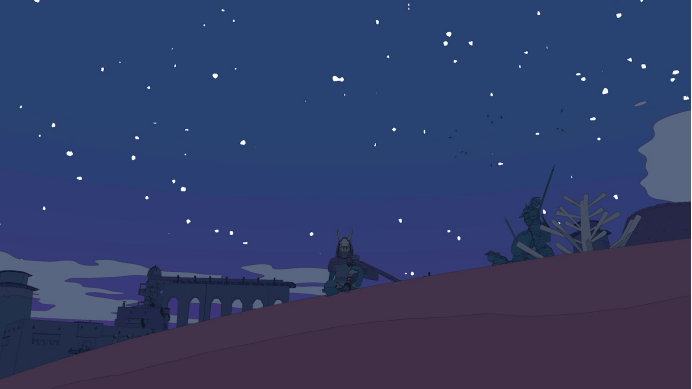
The first lie is a door that can’t be opened.
In _The Stanley Parable_, I am Stanley, an office worker numbered 427. One day, everyone disappeared. The narrator told me in a thick and determined voice, “Stanley went to the left door.” That’s a red door, which is very conspicuous. But I stopped. I went to the gray and inconspicuous door on the right.
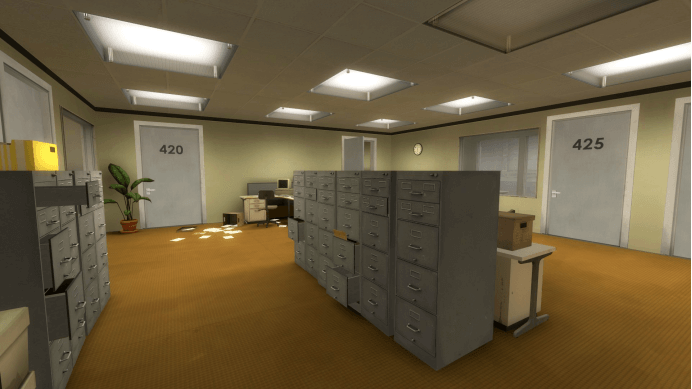
“No,” the narrator immediately said with a hint of offended confusion in his voice, “Stanley walked into the left door.”
But my character is obviously standing in the corridor on the right. The game world (physically) recognizes my choice, but its “voice” adheres to the fact that it is another version. At that moment, a slight sense of misalignment hit me. Should I believe the picture on the screen or the voice that seems to know everything? My eyes and ears became traitors for each other for the first time.
This is just the beginning. The game began to tease my common sense in a more absurd way. I walked into a storage room, and the narrator described the great choice I was about to make in an epic tone. In fact, I’m just clicking a “on/off” light switch repeatedly. It packages meaningless behavior into a solemn narrative; and disguises the really important choice as a ventilation duct without hints in the background. The map will cycle, the options will disappear, and the ending will laugh at all your efforts to achieve it. I gradually understood that the real “puzzle” of this game is not to solve any story, but to see when it is lying and when it is pretending to be honest. My weapon is not logic, but stubborn trust in my intuition — even if the whole world (including the omniscient voice) is telling you that you are wrong.
Another lie is quieter, but more chilling. In _The Beginner’s Guide_, the narrator Davey enthusiastically showed me various strange game scenes designed by his friend Coda. He explained every metaphor: this prison level represents the dilemma of creation, and the fire that cannot be lit symbolizes the extinction of inspiration. I was persuaded by his interpretation and began to sympathize with Coda and worry about his mental state.
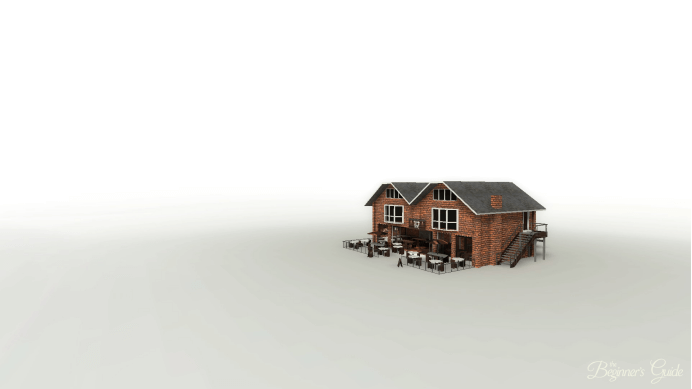
Until I play deeply enough. I began to notice some details that Davey deliberately ignored, or the room he was eager to skip and didn’t want me to stay. I gradually found that Coda’s game may not be a metaphor for sadness at all. They may just be... some interesting and meaningless experiments. Davey’s “interpretation” is more like a wishful thinking and even a forced invasion. In order to find a reason for his concern (or selfishness), he forcibly stuffed his friend’s work into the narrative framework of an “endangered genius”.
In the end, the game did not give the truth. It just puts two “realities” in front of me: one is a story told by Davey, full of care and tragedy; the other is the essence that I have seen with my own eyes and may be more bland and more private in those over-interpreted games. Which one should I believe? The game doesn’t lie, but it allows me to witness how the “narration” itself distorts the facts. My senses were not deceived, but my trust in the narrator and my impulse to give meaning to the fragments became the biggest trap.
Turn off the game, and the feeling of being fooled will not go over for a long time. But strangely, I’m not angry. Instead, I felt a strange sense of sobriety.
We live in a world built by countless narratives. News, history, evaluations of others, and even our memories of our past are all “told” versions. We are used to believing in the voice of authority, in clear logic, and in those stories that have been told repeatedly and become smooth.
These games are like a friendly vaccination. It first infects us with the virus of “suspicion” in our own field — a virtual world that we think we can control. It trains us a new sense: be wary of stories that are too smooth, keep a distance from a single explanation, and dare to turn our heads to the voice that claims to master the whole picture and take a look at the silent corner that it is try to hide.
It didn’t give me the truth. It gave me a pair of suspicious glasses. From then on, when I hear a perfect story again and see an unquestionable narrative, I always think of the two doors in front of Stanley and Davey’s overly enthusiastic voice. Then I will ask myself: Did I really see what I saw, or did I just hear what others asked me to see? This small pause may be the most precious freedom that thinking can have.