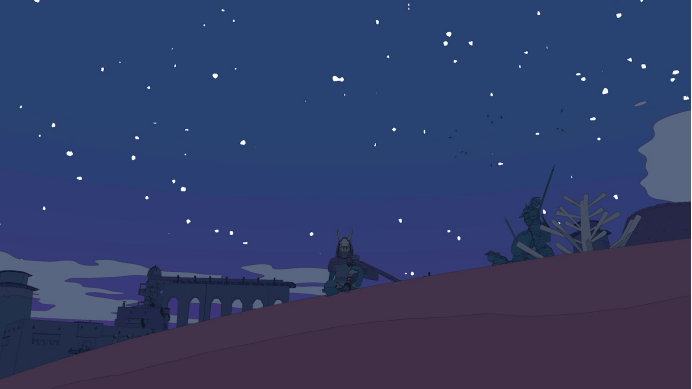
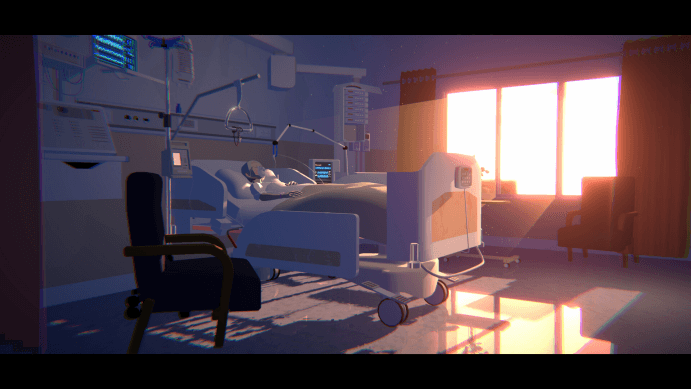
When the regular beep of the electrocardiogram monitor became the only steady rhythm in the whole world, I — Junon, a talented screenwriter — was lying on the operating cart in the emergency room. The anesthetic has not fully taken effect, and the edge of consciousness has begun to loosen. Between the threshold of life and death, memories do not come in, but explode. The first fragment: nine years old. My sister Mae and I were on the beach after the rainstorm. She pointed to a blue plastic bag floating on the sea in the distance and said, “Look, a jellyfish is running away.” This sentence is like a key, instantly opening the door of my memory that has been locked for 20 years. The story of _The Wreck_ takes place in a few minutes on this operating table, in the gap between heartbeat and forgetfulness, and an unavoidable emotional archaeology is carried out.
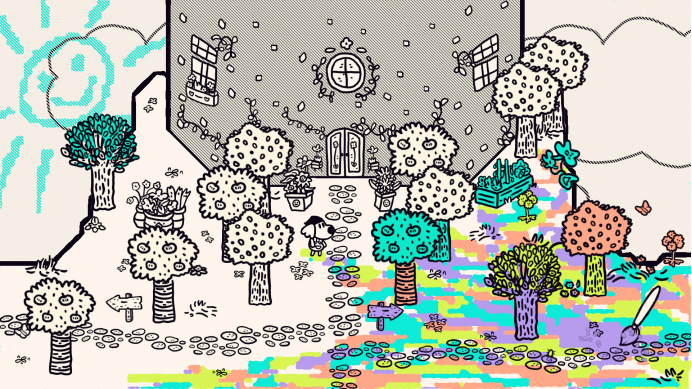
The game is presented in a unique interactive dynamic cartoon. In reality, the emergency room is a cold-toned line and a repressed light focus, while the fragments of memories are full watercolors, rough brushstrokes and vibrant colors. I “promote” the memory by clicking, dragging, and even quickly sliding the comics on the screen. For example, I need to repeatedly wipe the bus window blurred by the rain to see the back of my sister leaving outside the window; or quickly drag the cursor on the timeline back and forth to accelerate, overlap, and finally collapse into meaningless color blocks between the sisters. This kind of interaction is not just an operation, it is a metaphor in itself: memory is plastic and vague, requiring you to actively participate in “interpretation” or even “reconstruction”, and the process of reconstruction is often accompanied by emotional pain.
The flashback of memory is not linear. One second, it was the sweetness of sharing ice cream on a childhood summer night, and the next second, it jumped to the fierce quarrel in the dark stairs that changed everything in adolescence. The core puzzle of the game is to sort out the complex emotional network between me and my sister Mae. We used to be close and shared a fantasy world created; we became estranged, resentful, and finally lost contact because of personality differences, family changes, especially the key choice (I stayed in Paris to pursue the dream of a screenwriter, and she returned to her hometown to bear everything). Each memory is like a piece of a puzzle, but the content of the puzzle is emotions — guilt, envy, love, anger, and huge unspoken sadness.
The environment of the emergency room is not a passive background. The nurse’s conversation, the sound of medical equipment, and even the lines on the ceiling will trigger specific memory chains. When the doctor discussed “tissue damage”, what came to my mind was the old scar on my sister’s wrist; when I heard the instruction of “preparing for blood transfusion”, my memory instantly cut into the childish ritual of mixing each other’s blood and vowing never to be separated when we were young. My body is treated in reality, while my spirit performs a more difficult operation for myself in the maze of memories: cut open the emotional wounds that have already festered, and look straight at what is buried inside.
As the memory puzzle gradually completes, the floating “blue jellyfish” image runs through. It changed from a childhood fantasy to a broken blue glass paperboard when we quarreled for the last time, and then into a marine creature trapped in plastic that appeared repeatedly in my sister’s later paintings. It symbolizes the beautiful but suffocating and unbreakable entanglement in our relationship. The ultimate challenge of the game is not to solve a plot puzzle, but to complete a key “dialogue reconstruction” in the heart before the anesthesia completely takes away consciousness — in memory, rewriting the decisive quarrel is not to change the facts, but to change the angle of my listening, to hear my sister’s words, which has been engraved by me for many years. Fear and love ignored.
At the last moment before my consciousness sank into darkness, I seemed to see Mae at the end of my memory. It’s not her in childhood, it’s not her when we quarreled, but her now, I don’t know her. She didn’t say anything, but just nodded gently to me. The beep of the monitor lengthens and changes tone, becoming a long “Beep—”.
When I came back from the game, I found myself breathed a long sigh of relief, as if I had also experienced an emotionally tense operation. _The Wreck_ didn’t give me a fairy tale ending of reconciliation. It gave me something that might be more precious: understanding. It showed me that the emergency room is not only the threshold space of the body, but also the emotional emergency room. Some relationships are like complex wounds. The healing process often requires you to return to the scene of the injury first. Under the shadowless light of memory, you can bravely see the direction of each crack. And forgiveness is sometimes not to forgive the other person, but to forgive the young self who was also at a loss at that time and made the only choice he could make.