The first signal is not sound, but color.
In _ECO_, I landed on an emerald planet. The task was simple: to develop civilization and stop the meteorites that were about to hit. I cut down the first tree and began to build it. A few days later, when I looked at the global simulation, a dazzling yellow color, like a ulcerated scar, spread around my settlement. That’s because the soil fertility is declining because I cut off the root system of the soil consolidation. A body of water in the distance turned dark red — acidified, which may be caused by the runoff of my mining.
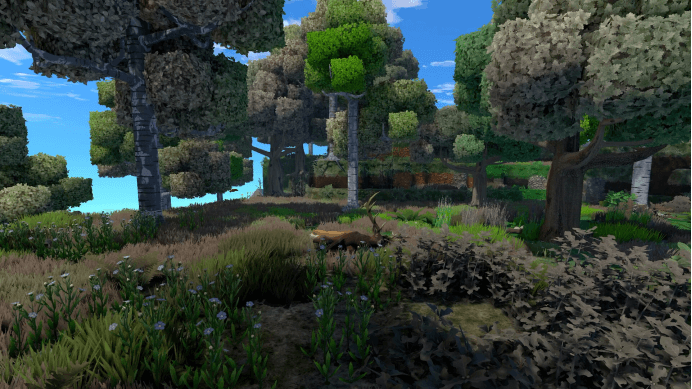
The “wisdom” I face is not any concrete creature, but the precise, fragile and silent feedback system of the planet itself. With the reduction of forests, the migratory deer will starve to death on the way to migration, and then the wolves that feed on them begin to attack my pasture. I emitted too much carbon, the polar ice caps melted, and my coastal factories were flooded by rising sea levels. This is not a punishment, but a result. It is the planet that “answers” my every action with its huge, slow and unquestionable metabolic logic. What I learned was not to have a dialogue with a “it”, but to interpret the undulating curves on the data map, like reading the gradually accelerated heartbeat and rising body temperature of a silent giant. The development of civilization has become a careful negotiation with the whole planet’s ecosystem.
The voice of another world is more direct and older. In _Rain World_, I am not the primate of all things, I am just a “survivor” — a thin and fragile creature like a sling. The “wisdom” here permeates every inch of the air. That’s a harsh, Darwin-style environmental intelligence.
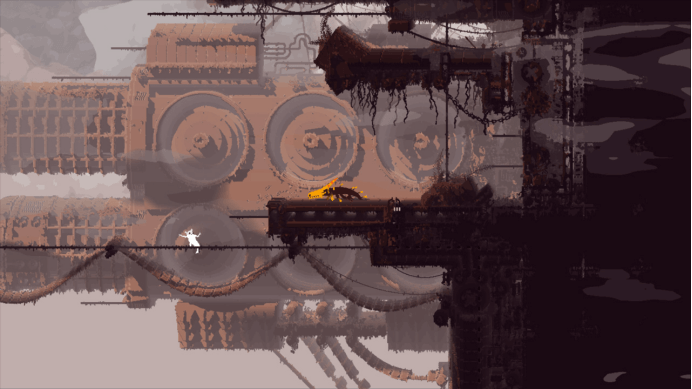
Lizards will plan ambushes according to the wind direction and smell, and will learn my usual escape route. Huge leech clusters are like conscious tides, rising and falling in the pipeline, sensing vibrations. What shocked me most was a creature called “scavenger”. They are like vultures, but have complex social classes. At first, they ignored me. When I began to carry pearls that could make a specific sound, they surrounded me, not attacking, but trading. They will put down the items they are holding and point to the pearls in my hand with their beaks, waiting for the exchange.
In this world, there is no NPC, only life that follows their own survival logic. Rainwater is the biggest “cleaner”. It rises periodically, washing away everything and erasing the life that is not enough to hide. I must understand this logic: lizards are more active after the rain because their prey will come out; some insects will return to their nests collectively before thunderstorms. My “strategy” is not to recite the version, but to learn the natural rhythm and the habits of all neighbors like primitive people. Wisdom is not what I have, but what I need to integrate. My survival depends on how well I can “understand” the thunder of the rain warning, the threatening gurgling in the throat of predators, and the barter and silent rules of the garbage collector.
I turned off the game and walked to the window. The trees in the park downstairs are just silent silhouettes in the twilight. But I suddenly felt that I could “hear” something else. The direction of the water flow in the underground pipe network of the city, the low sound of the power grid load humming, and even the invisible flow of the food chain — from takeaway packaging to garbage disposal. We live in a world where artificial systems and natural systems are deeply interlocked, but we often only hear our own voices.
These games give me a strange kind of listening training. It makes me try to perceive those huge, complex and non-personal systematic wisdom. In _ECO_, this kind of wisdom is the “shout” emitted by the planet through the ecological collapse, and in _Rain World_, it is the “law” written by the rainforest with survival and death. It has no emotion, but it is extremely sophisticated; it has no purpose, but it creates order.
We are used to imagining wisdom as a brain that can talk and plan. But these games reveal that wisdom may be how a forest distributes sunlight and moisture, how a planet balances the carbon cycle, and a cruel and effective operating protocol that a whole ecosystem has polished over hundreds of millions of years. Listening to this wisdom does not require ears. What is needed is the ability to observe the connection, the humility of understanding feedback, and the awareness of realizing that you are just a small node in countless fluid relationships. It’s not a conversation, but a resonance — when you finally adjust your frequency and synchronize with the pulse of that soil, that rain, and the whole silent world.